
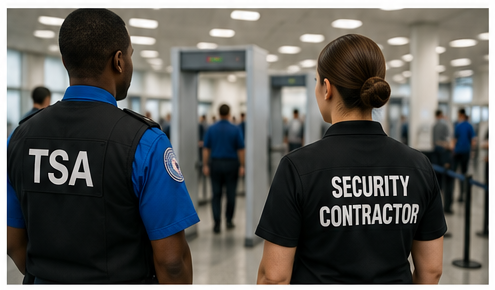
Airport security work includes several distinct career tracks. Some employees work directly for the Transportation Security Administration as federal Transportation Security Officers. Others work for private screening companies, airport authorities, airlines, or security contractors. The uniforms and work locations may look similar, but the employment structure, benefits, authority, training, and advancement options are often different.
This guide explains the main differences so you can compare both paths before app. It covers employment status, authority, hiring requirements, training, benefits, daily duties, and long-term advancement.
What Is a TSA Job?
A TSA job usually refers to a position employed directly by the Transportation Security Administration, a federal agency responsible for protecting transportation systems. At airports, the most familiar frontline role is the Transportation Security Officer, commonly called a TSO.
TSOs screen passengers, carry-on items, checked baggage, and airport employees entering secure areas. Their work may include operating X-ray and imaging equipment, conducting bag inspections, performing pat-downs, checking travel documents, and responding to security concerns. Applicants seeking local openings can review tsa jobs charlotte nc to see how location-specific listings present schedules, duties, and hiring requirements.
- Employer: The federal government through TSA.
- Primary setting: Passenger checkpoints, baggage areas, and other regulated screening locations.
- Typical status: Federal employee, subject to the conditions listed in the specific vacancy announcement.
- Training: TSA-required classroom and on-the-job instruction, followed by recurring certification and testing.
- Career path: Lead officer, supervisor, manager, inspector, training, intelligence, and other federal roles, depending on qualifications and openings.
What Is an Airport Security Contractor Job?
An airport security contractor job is a private-sector position. The worker is employed by a security company or service provider rather than directly by TSA. The exact duties depend on the contract. Some contractors provide passenger and baggage screening under TSA oversight. Others handle access control, patrols, employee screening, cargo security, terminal security, parking operations, or protection for airlines and airport facilities.
This distinction matters because the phrase “airport security officer” is broad. A private security officer stationed at an airport may not perform TSA checkpoint screening. The role may focus on doors, badges, vehicle gates, restricted areas, crowd control, incident reporting, or customer assistance. Always read the employer name and job description before assuming the position is equivalent to a TSO role.
- Employer: A private security firm, aviation services company, airline contractor, or airport vendor.
- Primary setting: Terminals, employee entrances, loading areas, parking facilities, gates, cargo zones, or screening checkpoints.
- Typical status: Private-sector employee assigned to an airport contract.
- Training: Employer training plus any airport, state, contract, or TSA-required credentials connected to the assignment. Candidates comparing private employers and broader aviation security openings can browse Airport security jobs and then verify the employer, worksite, licensing requirements, and exact scope of duties in each listing.
- Career path: Site supervisor, account manager, operations manager, training officer, compliance role, or positions on other company contracts.
TSA Jobs vs. Contractor Jobs at a Glance
|
|
|
|
|
|
|
|
|
|
|
|
|
|
|
|
|
|
|
|
|
|
|
|
|
|
|
|
|
|
|
|
|
|
|
|
How the Daily Duties Compare
The biggest area of overlap is passenger and baggage screening. At airports participating in a private screening program, contract screeners may perform checkpoint tasks similar to federal TSOs while operating under federal standards and TSA oversight. For passengers, the screening experience may look almost identical.
Outside those programs, private airport security work can be quite different. A contractor may patrol a terminal, watch surveillance systems, inspect employee badges, monitor loading docks, manage vehicle access, write incident reports, or respond to alarms. These roles support airport safety but do not automatically include TSA passenger-screening responsibilities.
Hiring Requirements and Background Checks
Both paths require trustworthiness, attention to detail, professional conduct, and the ability to follow strict procedures. Applicants should also expect identity verification and a review of their eligibility to work. Airport access usually requires fingerprinting, security vetting, and an airport identification badge.
TSA applicants must meet the requirements in the federal vacancy announcement. Depending on the role, these may include citizenship, age, education or experience, medical standards, drug screening, background investigation, and the ability to complete training. The job may require prolonged standing, lifting property, working around screening equipment, and interacting physically with passengers during required searches.
Contractor applicants must meet company standards and all requirements attached to the airport assignment. A state security license may be required for some posts. Other positions require a driver’s license, prior security experience, CPR certification, flexible scheduling, or the ability to obtain airport clearance. Requirements vary more widely because each employer and contract is different.
Pay, Benefits, and Job Stability
A TSA position follows the compensation and benefits described in the federal job announcement. Eligible employees may receive health insurance, retirement programs, paid leave, shift differentials, and other federal benefits. Pay varies by location, grade, experience, and schedule.
Contractor pay depends on the company, airport, collective bargaining agreement, contract terms, and local labor market. Some airport contracts offer competitive wages and strong benefits. Others provide fewer benefits or limit them to full-time employees. Contract renewal, reassignment, or a change in service provider may affect long-term stability, although workers may sometimes move to the incoming contractor.
Which Career Path Fits You?
A TSA role may suit you when you want:
- A federal career with a structured hiring and promotion system.
- Benefits and retirement options tied to federal employment.
- A direct role in regulated passenger or baggage screening.
- Potential mobility across TSA locations and federal career fields.
A contractor role may suit you when you want:
- A private-sector application process managed by a local employer.
- A wider selection of airport security duties beyond checkpoints.
- Experience in access control, patrol, cargo, airline, or facility security.
- A route into airport operations with advancement through a security company.
Finding the Right Opening
Start by checking who is listed as the employer. A title alone does not tell you whether a position is federal or private. Review the employer name, duties, pay structure, benefits, location, work schedule, required credentials, and application instructions.
Review each listing carefully and verify whether the employer is TSA, an airport authority, an airline, or a private contractor. Confirm the work location, screening authority, schedule, physical requirements, benefits, and application steps before submitting your information.
Additional Career Resource
For another perspective on federal screening work, read Indeed’s guide, What Does a TSA Officer Do?. The resource reviews common responsibilities, workplace expectations, training, and skills associated with Transportation Security Officer careers.
Before You Apply
- Confirm the employer and whether the position is federal or private.
- Compare the listed duties with the type of security work you want.
- Review citizenship, licensing, education, fitness, and experience requirements.
- Check whether the job is full-time, part-time, seasonal, or tied to a specific contract.
- Compare health, retirement, leave, training, and advancement information.
- Prepare accurate employment history and identification documents.
- Follow only the application steps shown in the verified job listing.
Final Thoughts
TSA officers and airport security contractors both help protect passengers, employees, aircraft, and airport facilities. The key difference is who employs you and what the contract authorizes you to do. TSA positions offer federal employment and a defined public-service structure. Contractor roles offer private-sector opportunities that range from checkpoint screening to patrol, access control, cargo security, and facility protection.
Neither title should be judged by the name alone. Compare the actual employer, responsibilities, qualifications, compensation, and advancement options. A careful review will help you choose the path that matches your career goals and apply with clearer expectations.